




SysAI
Systems for the Future of AI/ML (SysAI)
Detailed Schedule
Panelists: Seema Kumar (Harman), Anand V Bodas (Intel), Dilip Kumar Dalei (DRDO), Ajay Kattepur (Ericsson Research)
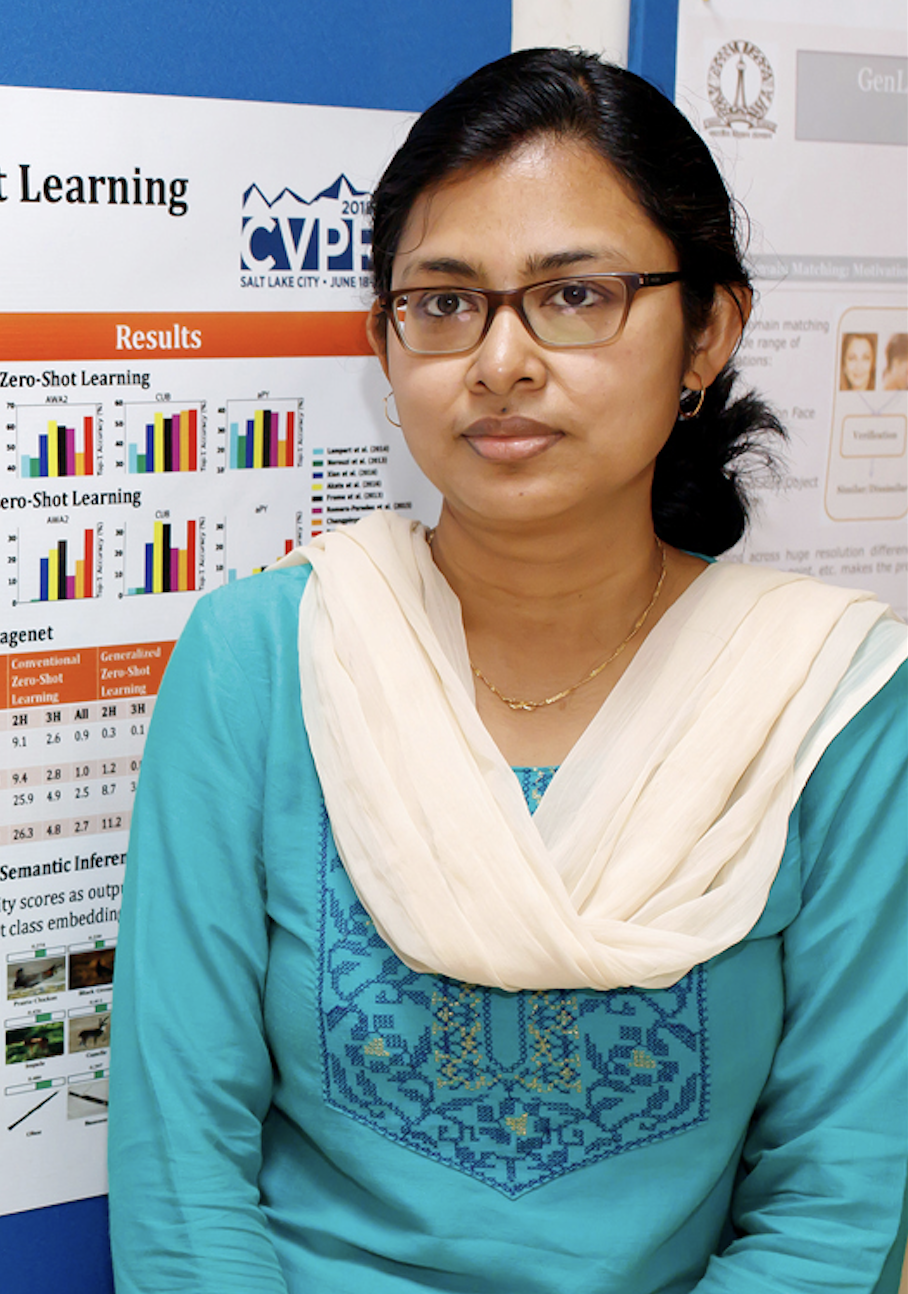
Soma Biswas
IISc Bangalore, IndiaVisit Homepage
6th January 2026, 9:30 - 10:30 AM (IST)
 Adapting Models in Dynamic Environments
Dynamic environments pose significant challenges for AI/ML systems deployed in the real world. Models often need to incorporate new and evolving concepts over time without being retrained from scratch—an approach that is both computationally expensive and impractical for large-scale systems. Beyond continual concept acquisition, practical deployments frequently expose models to conditions that differ from their training distributions, leading to performance degradation and unexpected failures. In this talk, we will discuss recent advances in continual learning and test-time model adaptation that enable AI/ML systems to update themselves under shifting deployment scenarios. We will also examine how these concepts are applicable in the context of foundation models.
Dr. Soma Biswas is a Professor in the Electrical Engineering Department at the Indian Institute of Science, Bangalore. She received her MTech from the Indian Institute of Technology, Kanpur, and PhD from the University of Maryland, College Park, USA. She then worked as a Research Faculty member at the University of Notre Dame, USA, and as a Research Scientist at GE Research in Bangalore, before joining IISc. Her research focuses on Computer Vision, Machine Learning, and Deep Learning. She has received the “Best Woman Engineer” award from the IEEE India Council, the Google India AIML Research Award, and the SERB Power Fellowship from the Government of India for her contributions in this area.
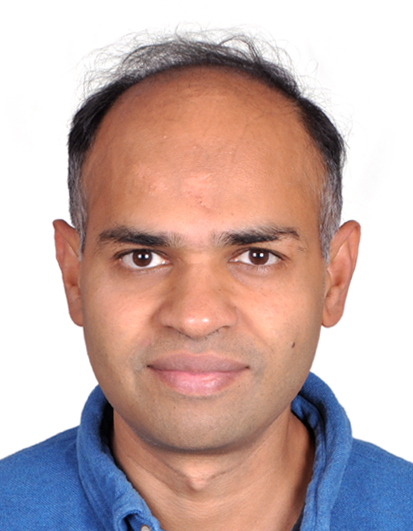
Nipun Kwatra
Microsoft Research, IndiaVisit Homepage
6th January 2026, 2:00 - 3:00 PM (IST)
LLM inference has become the largest GPU workload at Microsoft, and increasingly across the industry. In this talk, I will walk through the lifecycle of an LLM inference request, showing how different stages place very different demands on GPU resources, and highlight the key sources of inefficiency that arise along the way. I will then share a set of ideas and systems techniques we have developed at MSR India that address these bottlenecks and enable efficient LLM inference at scale.
Nipun Kwatra is a Principal Researcher at Microsoft Research, India. His research interests lie at the intersection of deep learning and computer systems. Before joining Microsoft Research, he co-founded a startup in the personal video space. Prior to that, he spent four years at Google, working on Web Search Infrastructure and AdWords backend teams. He received his Ph.D. in Computer Science from Stanford University in 2011, where he worked on physically based simulation of compressible flow and solid–fluid coupling, with applications in both computer graphics and scientific computing. He received his M.S. in Computer Science from Georgia Tech and his B.Tech. in Computer Science from IIT Delhi.
Panel Discussion
Self-Optimizing AI Systems: Autonomic Infrastructure for the Next Era of Machine Learning
As AI/ML workloads scale to unprecedented levels of complexity, the traditional model of manually tuned, statically configured infrastructure is rapidly becoming unsustainable. The next transformative leap in AI systems will come from self-optimizing, autonomic infrastructures that can observe, adapt, and reconfigure themselves in real time. This panel brings together researchers and practitioners exploring how machine learning can be used to optimize the systems that run machine learning, ushering in an era where clusters dynamically balance workloads, compilers tune themselves, communication paths reconfigure to avoid congestion, and distributed runtimes continuously learn from telemetry. The discussion will span ML-guided scheduling, autonomic performance tuning, self-healing clusters, model-structure-aware resource allocation, adaptive memory and caching systems, and the emerging safety and transparency challenges posed by increasingly autonomous infrastructure. By examining the technologies and open research problems behind self-optimizing AI systems, this panel aims to outline the architectural principles and research directions that will define the next decade of scalable, efficient, and resilient AI computing.
Date & Venue: 6th January 2025, 4:30 – 5:30 PM (IST), Indian Affairs


Accepted Papers
-
BloBS-FL: A Robust Architecture of Blockchain Based Decentralized Split Federated Learning
-
Post-Quantum Secure IoT-Enabled Crop Recommender System Using Machine Learning
-
Adaptive Model Selection using Meta Models and Drift Adaptation
-
A Hybrid Geostatistical and Deep Learning Framework for Urban Pollutant Concentration Prediction from Sparse Data
-
TinyFlame: Context-Aware Cooking Activity Detection Using Flame Sensing on Edge Devices
-
FusionPhishGuard: An Attention-Enhanced Multi-Branch Framework for Intelligent Phishing Detection on Mobile and Web Platforms
-
Survival Classification of High-Grade Gliomas using an Interpretable 3D Multi-modal System
-
PDFInspect: A Unified Feature Extraction Framework for Malicious Document Detection
-
iAirGuard: A Modular IoT Architecture with Dynamic Sampling and TinyML-Based Fault Detection for Air Quality Monitoring
-
Energy-Efficient Coverage Path Planning for Multi-UAVs in Dynamic Threat Environments
-
DPNet: A Lightweight TinyML Model for Real-Time Bathroom Sound Classification
-
Learning-Based Optimization of EV Routing with V2G Integration & On-the-Go Energy Harvesting
-
TinyMLAir: Indoor Air Quality of Domestic Activities through TinyML
-
Leveraging Conditional Distribution Similarity for Task-Aware Personalization in Federated Learning
-
ML-Based Refrigerator Scheduling for Energy Efficiency in Renewable-Integrated Smart Homes
Workshop Overview
The rapid evolution of Artificial Intelligence (AI) and Machine Learning (ML) has brought unprecedented opportunities and challenges. As organizations increasingly deploy AI/ML solutions at scale and the edge, there is a growing need for expertise in developing, optimizing, and managing these systems. The workshop aims to bring together professionals from academia and industry to discuss and explore the challenges, solutions, and advancements in building robust and efficient systems that support real-world AI and ML solutions operating at scale and at the edge.
We invite researchers, practitioners, and experts in the fields of Computer Systems, Artificial Intelligence (AI) and Machine Learning (ML) to contribute to our upcoming workshop on "Systems for the Future of AI/ML." The workshop aims to bring together professionals from academia and industry to discuss and explore the challenges, solutions, and advancements in building robust and efficient systems that support real-world AI and ML solutions operating at scale and at the edge.
Call for Papers
Camera Ready Guidelines
Important Dates
| Paper Submission deadline: |
| Notification of Acceptance: |
| Camera-ready Submission: |
| Workshop Date: 6th January 2026 |
Topics of Interest:
We encourage the submission of papers on a wide range of topics related to systems for AI and ML, particularly focusing on developments at scale and the edge. Relevant areas of interest include, but are not limited to:
- Updating current systems to support ever-growing ML models
- Scalable system architectures for the future of AI/ML
- AI/ML for large-scale edge computing solutions
- Distributed systems for distributed AI models of the future
- Efficient deployment of AI models of the future
- Real-time processing and inference at the edge
- Resource-efficient algorithms for large-scale data
- Optimization techniques for edge-based AI applications
- System enhancements to bring AI to the edge
- Case studies and practical experiences in deploying AI/ML at scale and the edge.
- Hardware-aware AI modelling and deployments
- Platform and AutoML for edge AI operations
- Generative AI on the edge
- Technical benchmarking and experiences from large-scale edge-based AI solutions
Submission Guidelines
- SysAI invites submission of original work not previously published or under review at another conference or journal.
- Submissions (including title, abstract, all figures, tables, and references) must be no greater than 6 pages in length.
- Reviews will be double-blind: Information about the authors will not be shared with the reviewers during the review process. The submitted paper should be anonymous and not have any reference to the authors' names or institutions.
- Submissions must follow the formatting guidelines as given on the IEEE Website; and those that do not meet the size and formatting requirements will not be reviewed.
- All papers must be in Adobe Portable Document Format (PDF) and submitted through the SysAI Workshop submission site on EDAS.
- All workshop papers will appear in the conference proceedings and be submitted to IEEE Xplore and other Abstracting and Indexing (A&I) databases.
Papers can be submitted through EDAS: https://edas.info/N34339
For any queries, please contact the workshop chairs at comsnets.workshop@gmail.com
Technical Program Committee
- Sourav Kanti Addya (NIT Surathkal)
- Pramit Biswas (Intel)
- Soumyajit Chatterjee (Brave)
- Debasree Das (University of Bamberg)
- Snigdha Das (Ericsson Research)
- Ritesh Kalle (Hitachi Research, India)
- Ajay Kattepur (Ericsson Research)
- Meera Lakshmi (University of Technology Sydney)
- Guohao Lan (TU Delft)
- Basabdatta Palit (IIEST)
- Sugandh Pargal (Fujitsu)
- Sougata Sen (BITS PIlani - Goa Campus)
- Dulanga Weerakoon (SMART Research Centre, Singapore)
- Poonam Yadav (University of York, UK)
Systems for the Future of AI/ML (SysAI) Workshop Co-Chairs

Alok Ranjan
Bosch
India
Rohit Verma
Intel Labs
India











.png)