IIGW
Internet Intelligence and Governance Workshop (IIGW)
Detailed Schedule
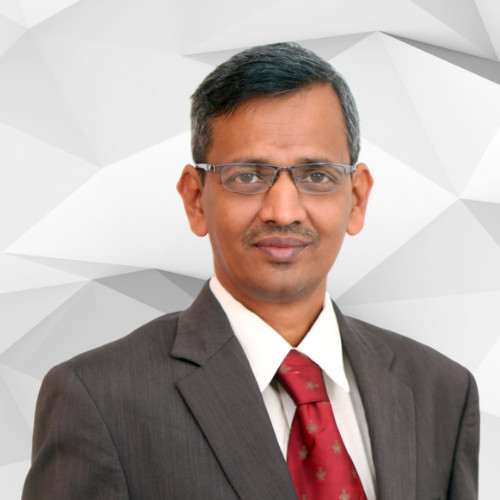
S D Sudarsan
Executive Director, CDAC, IndiaVisit Homepage
 Trustworthy Internet Intelligence: Security, Privacy, and Ethics by Design
This keynote examines the concept of Trustworthy Internet Intelligence, arguing that security, privacy, and ethics must be treated not as afterthoughts or compliance checkboxes, but as design principles of the Internet itself. It explores emerging risks such as opaque algorithmic control, data concentration, and autonomous network behaviour, highlighting why traditional governance approaches struggle to keep pace with technically mediated decision-making.
Drawing from advances in cybersecurity, cryptography, identity systems, DNS security, and AI governance, the talk presents a design-centric perspective on trust, where resilience, accountability, transparency, and human oversight are built into protocols, standards, and intelligent network architectures.
The keynote concludes by outlining a forward-looking governance framework for trustworthy Internet intelligence, one that aligns technical innovation with societal values, strengthens digital trust, and positions India to play a leading role in shaping global norms for the intelligent Internet.
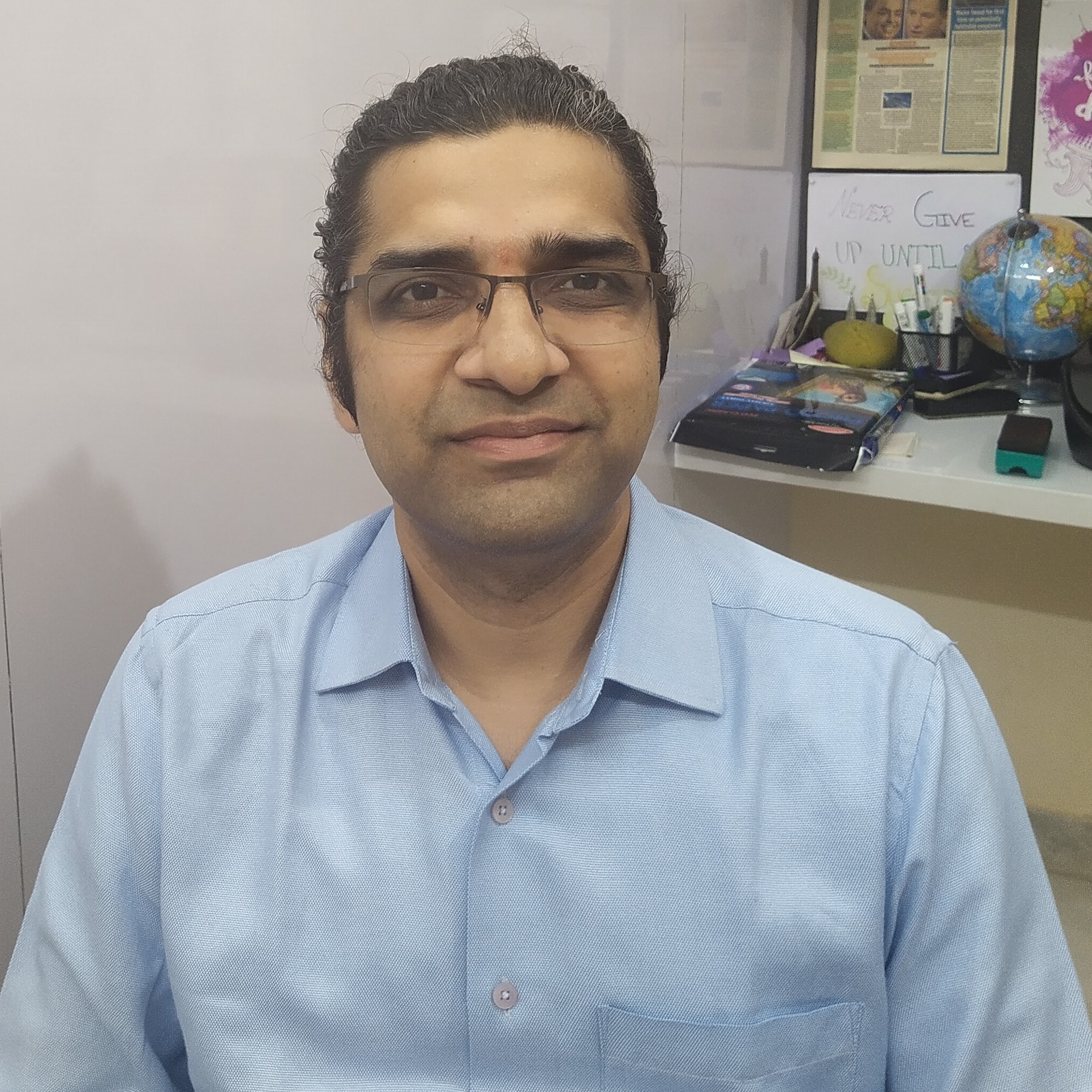
Satish Kanugovi
Nokia Bell Labs, IndiaVisit Homepage
With 6G standardization underway and picking speed, the shape that future mobile networks will take is becoming increasingly clearer. We begin with discussing the current industry trends and future human needs that are shaping the evolution to the next generation of mobile networks. We will then describe the technology and system considerations like AI, Security, Sustainability and Sensing driving the design of the 6G network, including opportunities and challenges along the way.
Satish Kanugovi is part of Nokia Strategy and Technology division and heads the Standardization and Industry Engagements in APAC, focussing on India, Japan and Korea regions. He is a Distinguished Member of Technical Staff (DMTS) and Senior Member IEEE. In his earlier roles, he has been part of Robotic Systems Research at Nokia Bell Labs, and contributing to wireless research and standardization in the Mobile Networks CTO organization. Current research interests include 6G communication systems with focus on sustainable and secure networking. He did his engineering in Electronics and Communication from Delhi College of Engineering and masters in Nyaya and Vaisheshika from Karnataka Samskrit University.
D. Manjunath
IIT Bombay, IndiaVisit Homepage
D. Manjunath received his BE from Mysore University, MS from Indian Institute of Technology, Madras and PhD from Rensselaer Polytechnic Inst, Troy NY in 1986, 1989 and 1993 respectively. He has worked in the Corporate R & D center of General Electric in Scehenctady NY during the summer of 1990. He was a Visiting Faculty in the Comuter and Information Sciences Dept of the University of Delaware and a Post Doctoral Fellow in the Computer Science Dept of the University of Toronto. He was on the Electrical Engineering faculty of the Indian Inst of Technology, Kanpur during December 1994 - July 1998. He has been with the Deptt of Electrical Engineering of IIT, Bombay since July 1998.
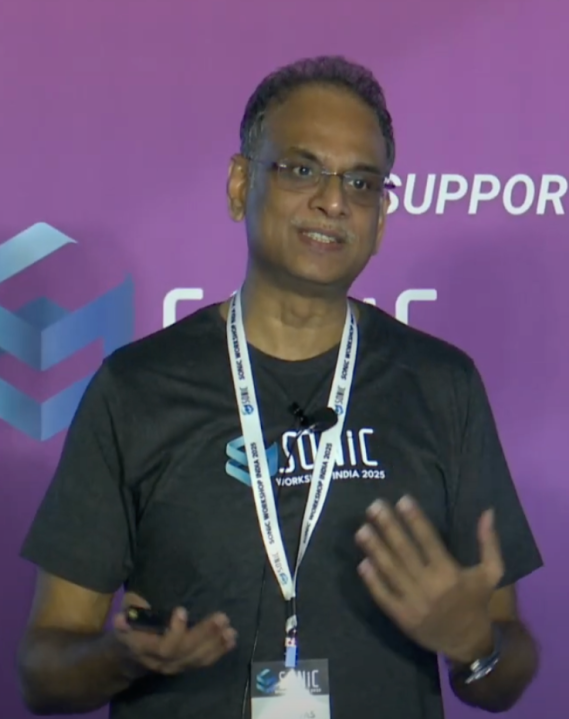
Sreenivas Voruganti
Google, IndiaVisit Homepage
The talk explores the critical and evolving intersection of Artificial Intelligence (AI) infrastructure and Software Defined Networking (SDN). The discussion will map the evolution of SDN toward the current Compute-Network Convergence era, where the Network is becoming an integral part of the Compute fabric. Furthermore, the presentation will identify critical research directions for next-generation infrastructure development, including power efficiency, scalability, and the shift from traditional automation to AI-driven Intent-Based Networking
Sreenivas Voruganti leads the Google DataCenter Software Defined Networking (SDN) team in Bengaluru. His work focuses on building large-scale datacenter fabrics and the network infrastructure essential for powering AI Infrastructure. Sreenivas has held roles at Juniper Networks, Lucent Technologies, Tellabs, and Arista. He is an inventor in US Patents and the author of the book Software-Defined Networking (SDN) with OpenStack.
Accepted Papers
-
AI-Powered Intelligent System through context aware log scrutiny for Anomaly detection
-
Context-Aware Secure Prompt Engineering for Large Language Models Using ERP Metadata and Role-Based Data Constraints
-
Cost-optimized Multi-Technology Gateway Placement for Heterogeneous IoT Networks
-
Revisiting Queue Delay Estimation Techniques in PIE and FQ-PIE: An Empirical Evaluation
-
Environment-Aware Real-Time Intelligent Central Unit-User Plane Migration in O-RAN
-
Promoting Equitable Access to Glaucoma Screening Using Open-Source Multimodal Imaging Tools
-
Smarter Grids Through Clearer Vision: AI for Predictive Fault Detection
-
TagFlow: A Hybrid Control and P4 Data Plane for Scalable IoT Device Validation and Connectivity
Workshop Overview
The India Internet Governance Forum (IIGF) is an initiative associated with the UN Internet Governance Forum (UN IGF), established in 2006. The IGF is a multi-stakeholder governance group that aims to enable a platform for policy dialogue on issues of Internet Governance. Through an open and inclusive process, IIGF brings together all stakeholders in the Internet Governance ecosystem in the country - including Government, Industry, Civil Society, Academic Community, and social minorities - as equal participants in the larger Internet Governance discourse. The IIGF aims to provide a platform to facilitate discussions between experts from industry, academia, and research to express their vision and their findings related to the next generation Internet.
Traditionally, a technical conference is organized with IIGF. From last year, the technical conference is organized as a workshop collocated with COMSNETS. The workshop shall provide a platform to present the research work on the topics of interest and shall provide an effective networking stage. The following key points are aimed as objectives at IIGW:
- To Cover a broad range of digital governance issues, including civil society, artificial intelligence impact of India's Internet, and data privacy.
- To help in understanding the greater initiatives on smart cities, public policy on the in ternet and gaps to address in civil society with advanced technologies.
- To automate solutions to problems faced by various industries like agriculture, health services, energy, security, disaster management, etc, by using next-generation networks.
- To provide a platform to discuss ongoing implementation support to various initiatives on public policies on intelligent internet, including critical efforts at multilingualism and multistakeholderism.
- Strengthen capacities for participation in digital policymaking at all levels of expertise and backgrounds, including advanced research.
Call for Papers
Camera Ready Guidelines
Important Dates
| Paper Submission deadline: |
| Notification of Acceptance: |
| Camera-ready Submission: |
| Workshop Date: 6th January 2026 |
Papers are invited from the researchers in the areas (but are not limited to) listed below.
Topics of Interest:
- Internet
- Multilingual Internet
- Rural connectivity
- Universal access and meaningful connectivity
- Affordable Internet
- ICT infrastructure
- Energy-efficient technologies
- Satellite broadband
- Edge and cloud computing/networking, CDNs
- Digital divide and online inequality
- Public policy on the Internet
- Security and Data Privacy
- Data and identity protection
- Cybersecurity
- Cryptography: enabling technologies
- Ethical use of next-generation technologies
- Cyber hygiene for all
- Trust, security, and stability
- DNS security
- Cross-border data flows
- Advanced Technologies
- Big data, machine learning and AI for Internet
- Internet of Things
- Next-generation Internet and services
- Internetworking protocols and Internet applications
- Blockchain and applications
- Visible light communications
- Metaverse
- Standards and Policies
- 5G and beyond standards
- Open 5G stack
- Open RAN (O-RAN)
- Wireless LANs
- Internet resilience
- Heterogeneous networks
- Ethics of Internet
- Inclusive Internet
- Indian stack for services and applications
- Applications
- Online education
- Smart cities
- Health care
- Agriculture
- e-commerce
- Banking and finance
- Disaster management
Submission Guidelines
- The IIGW invites submission of original work, not previously published or under review at another conference or journal.
- Submissions (including title, abstract, all figures, tables, and references) must be no greater than 6 pages in length.
- Reviews will be double-blind: authors’ names and affiliations must not be included in the submission.
- Submissions must follow the formatting guidelines as given on the IEEE Website; and those that do not meet the size and formatting requirements will not be reviewed.
- All papers must be in Adobe Portable Document Format (PDF) and submitted through the IIG Workshop submission site on EDAS.
- All workshop papers (both regular and invited) will appear in conference proceedings and be submitted to IEEE Xplore as well as other Abstracting and Indexing (A&I) databases.
Papers can be submitted through EDAS: https://edas.info/N34338
For any queries, please contact the workshop chairs at comsnets.workshop@gmail.com
Technical Program Committee
- Mayukh Roy Chowdhury (Nokia Bell Labs)
- Gaurav Kasbekar (Indian Institute of Technology Bombay)
- Veerendra Kumar Gautam (University of Padova, Italy)
- Mukesh Kumar Giluka (Jawaharlal Nehru University, Delhi)
- Venkateswarlu Gudepu (University of Texas at Dallas (UTD), USA)
- Anish Hirwe (Indian Institute of Technology Palakkad)
- Prashant PVN (Visvesvaraya National Institute of Technology Nagpur)
- Venkatrami Reddy (National Institute of Technology Warangal)
- Aritra Chatterjee (Nokia standards division)
- Pragati Shrivastava (Indian Institute of Technology Bhubaneswar)
- Anand Jee (Samsung Research India-Bangalore)
- Nagendra Kumar (Indian Institute of Technology Indore)
Internet Intelligence and Governance Workshop Co-Chairs
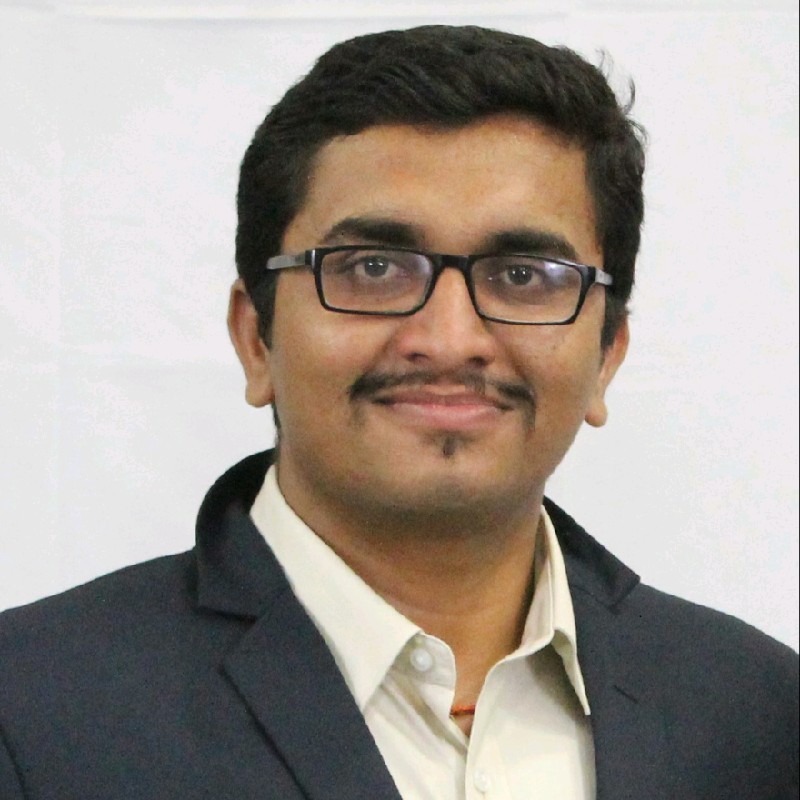
Anand Baswade
Indian Institute of Technology
Bhilai, India

Chitradeep Majumdar
Nokia Standards Division
Bangalore, India